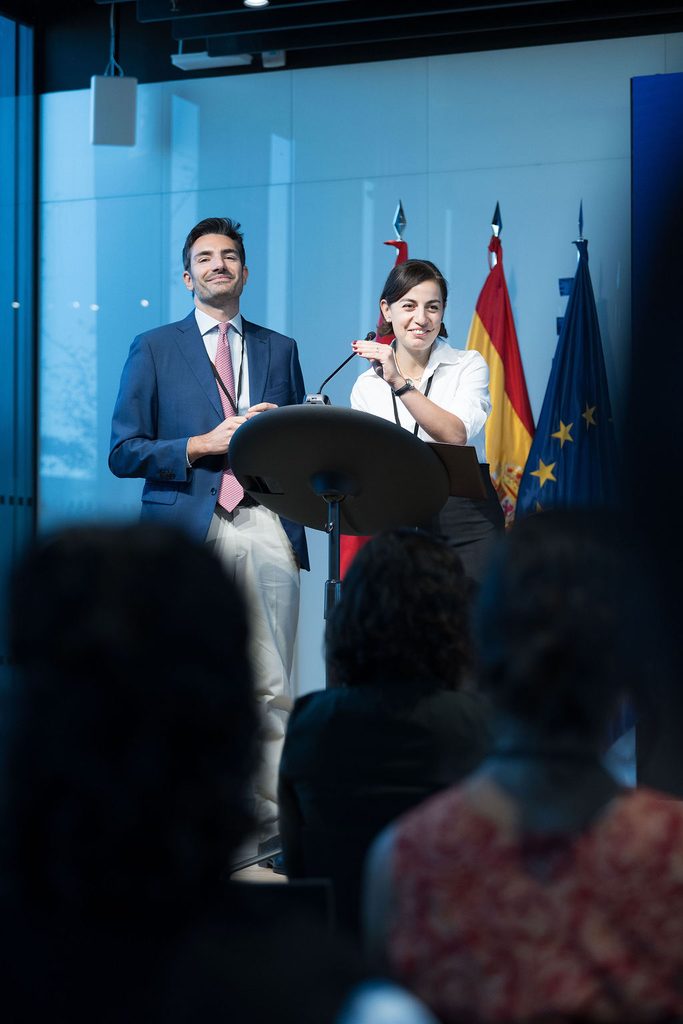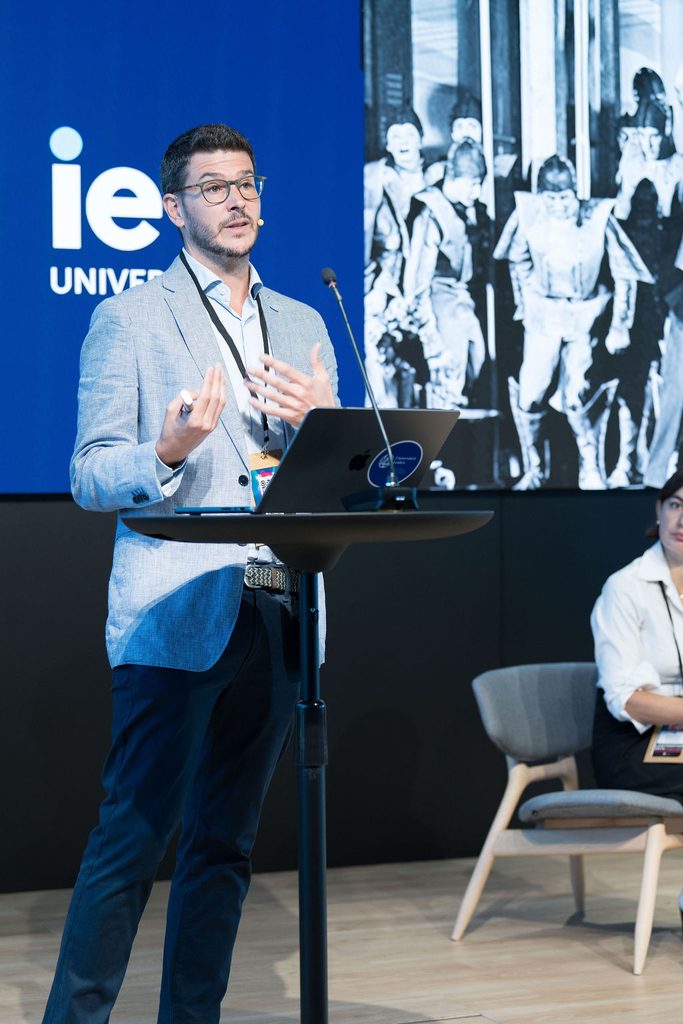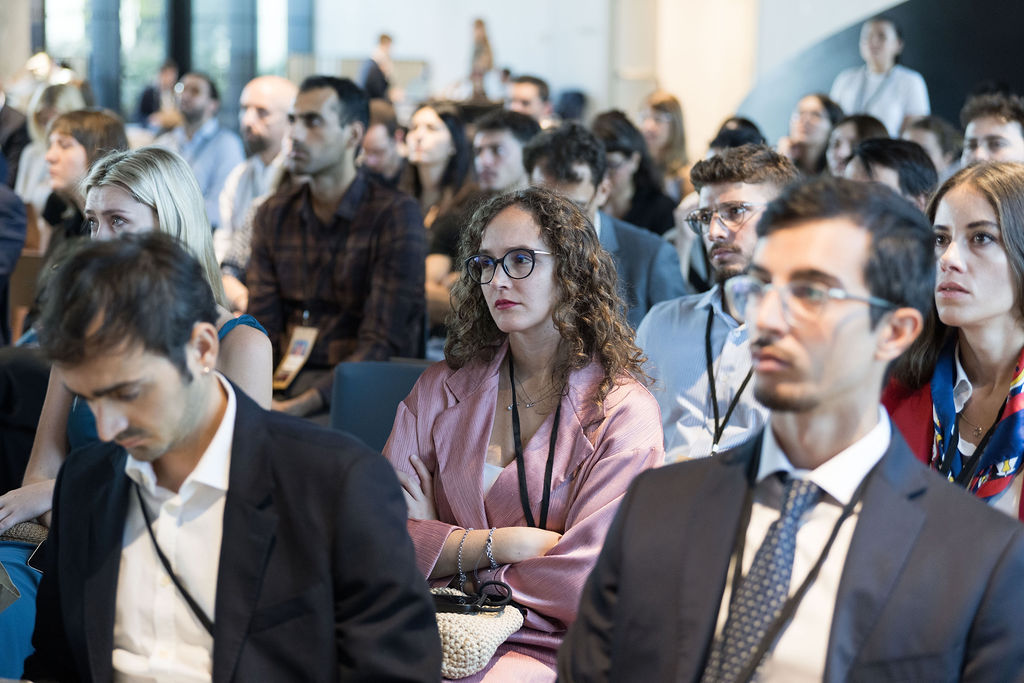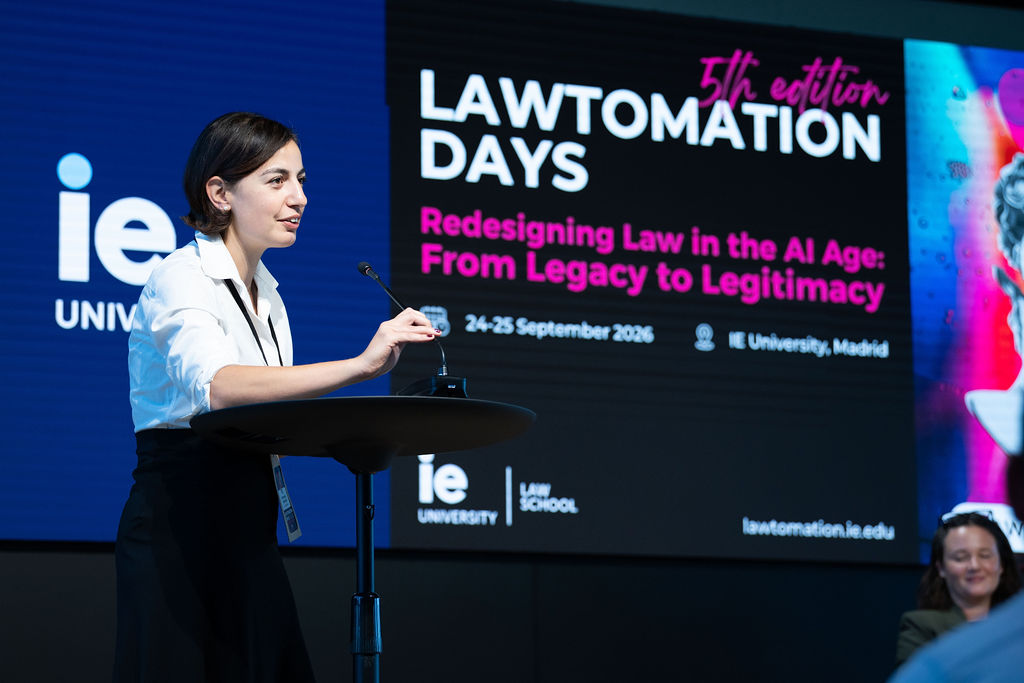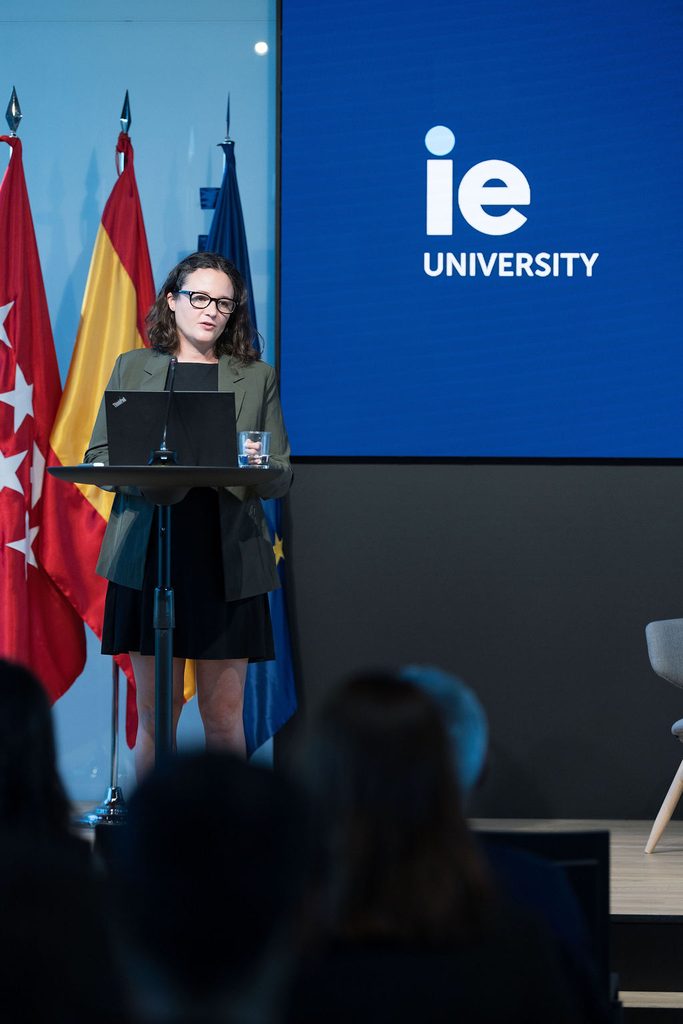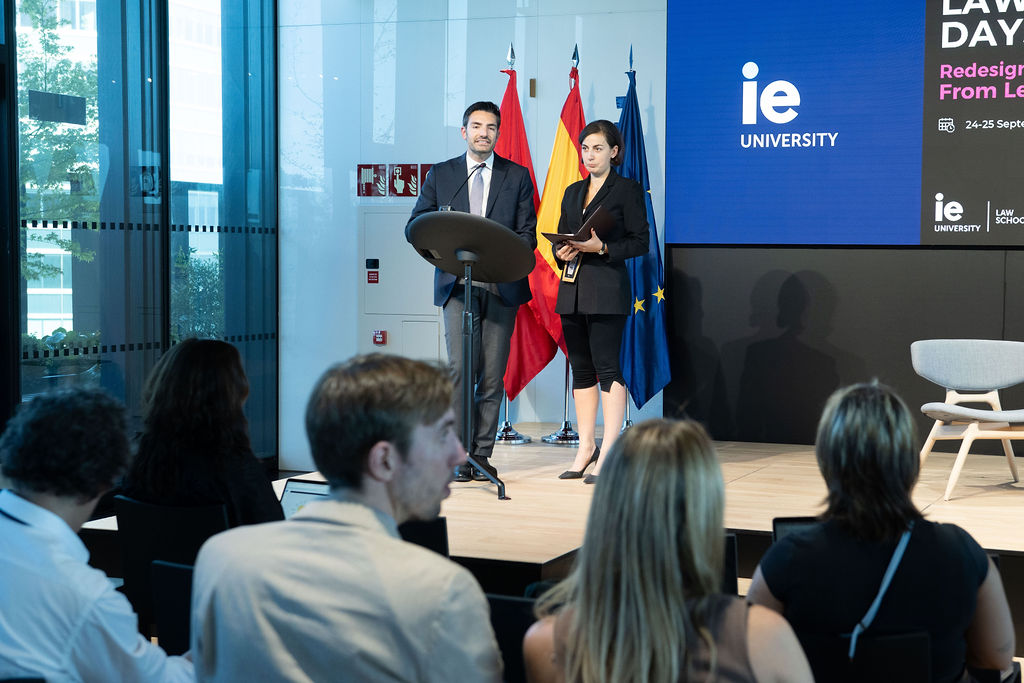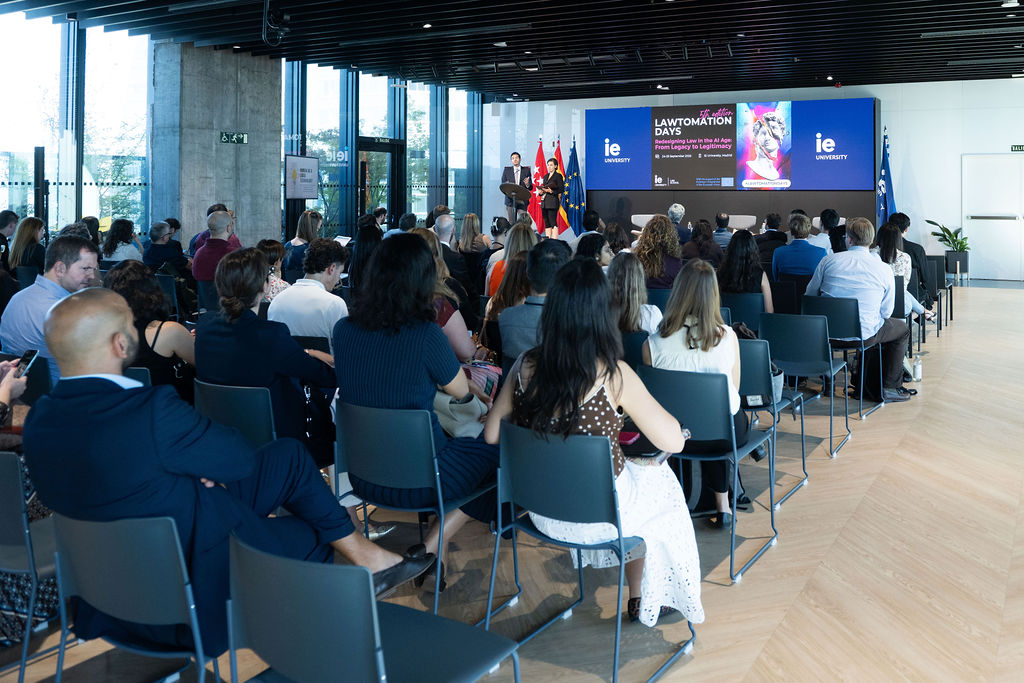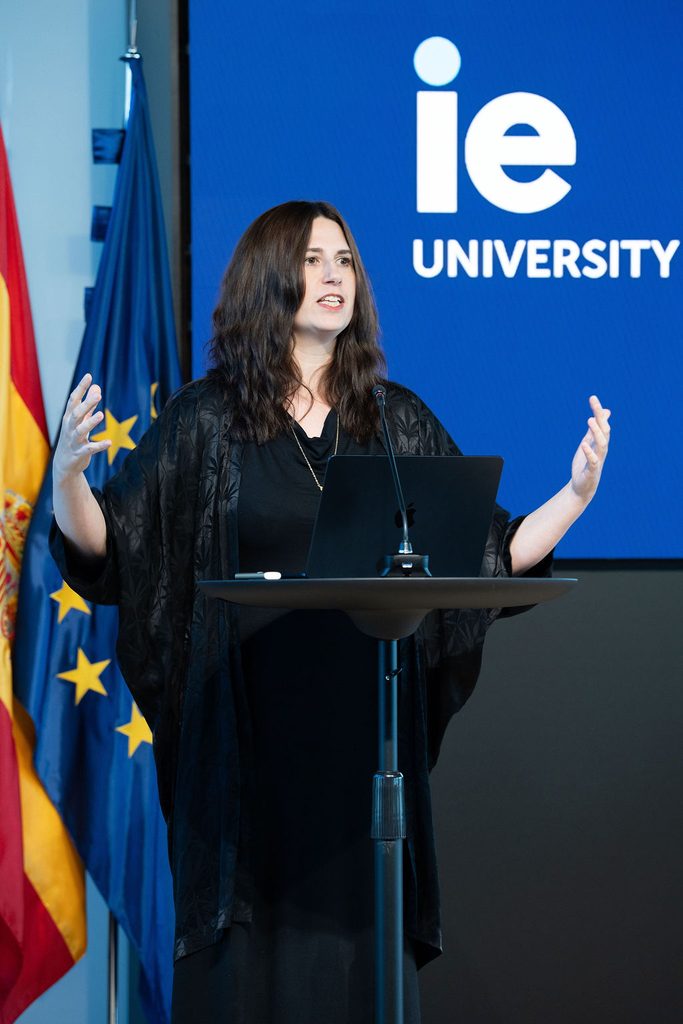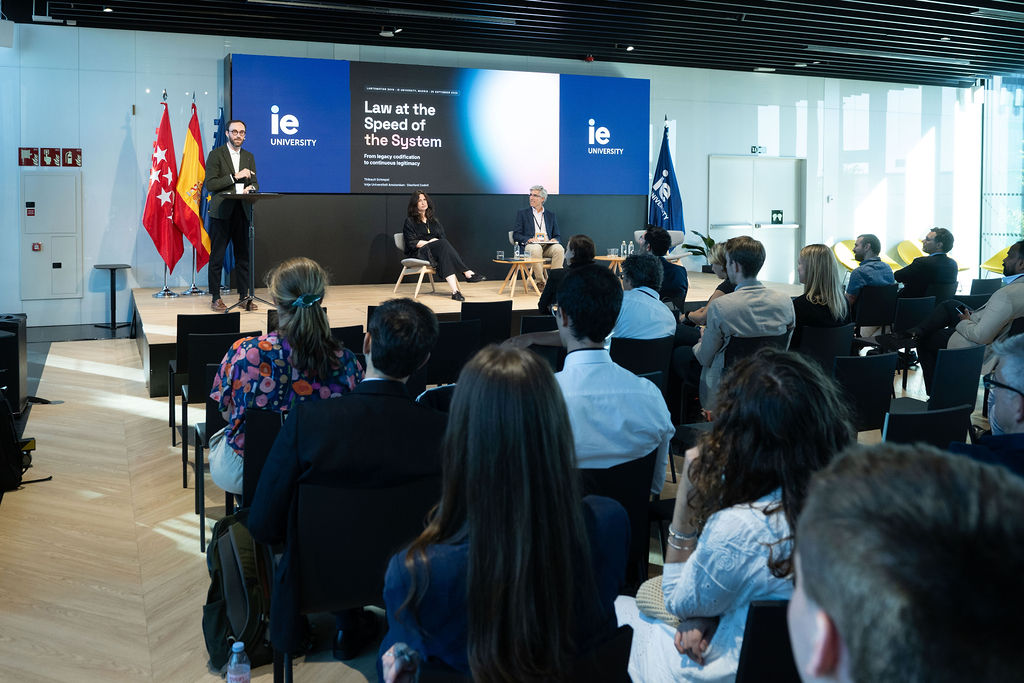

IE Law School hosted the fifth edition of Lawtomation Days in Madrid on September 24 and 25.
Organised by IE Law School’s Jean Monnet Centre of Excellence for Law and Automation (Lawtomation), this year’s conference took as its theme “Redesigning Law in the AI Age: From Legacy to Legitimacy”. The conference brought together speakers and legal professionals worldwide to examine AI in the law, most notably through discussions of the AI Act and the GDPR.
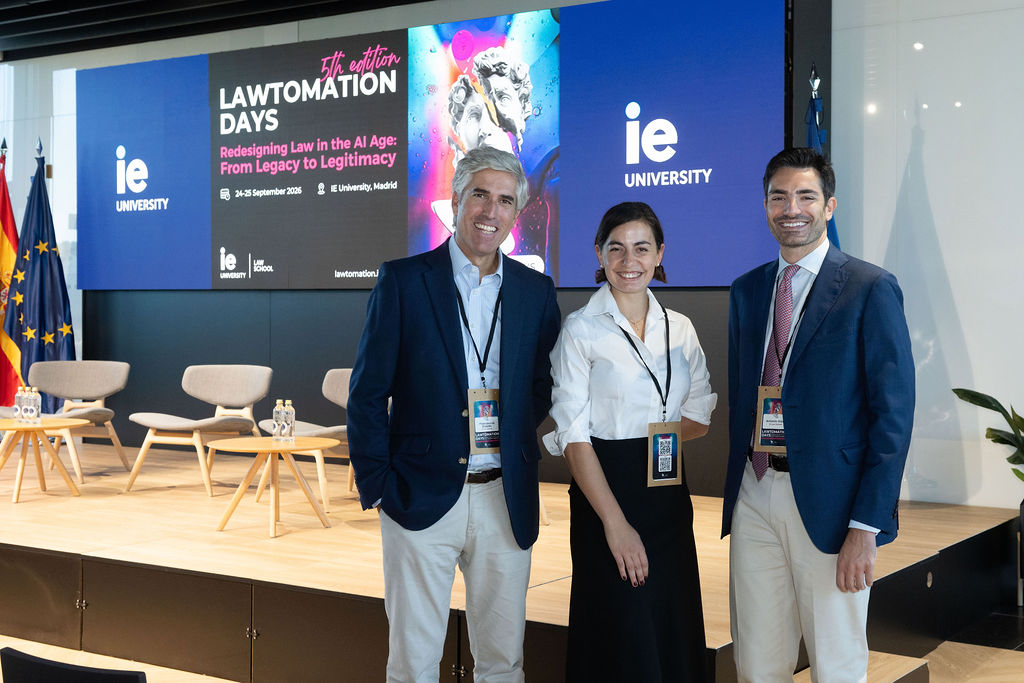
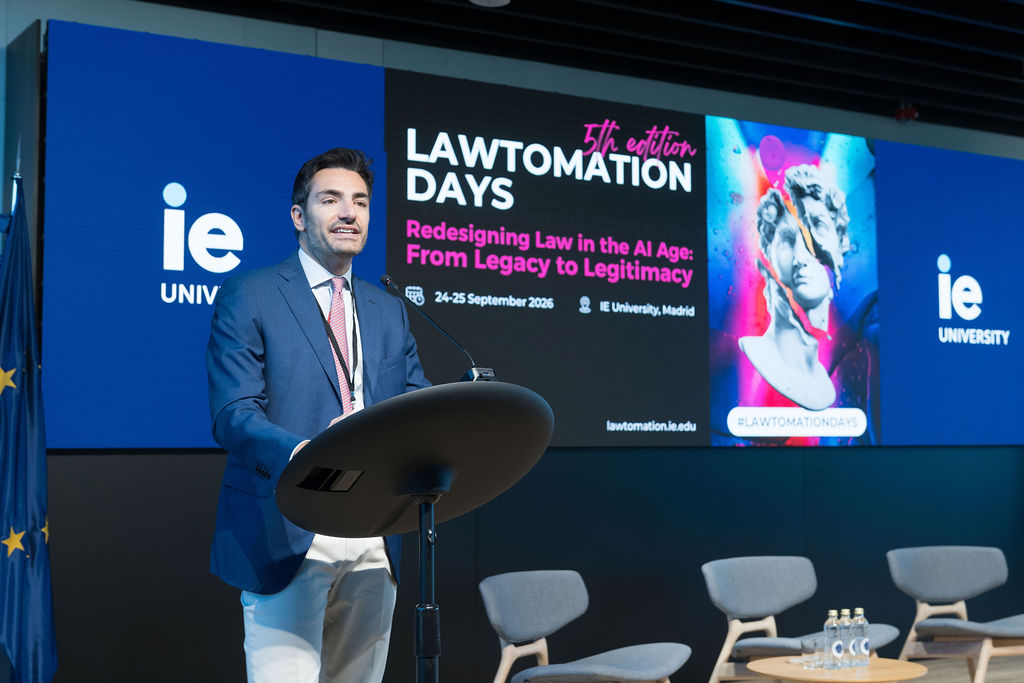
Antonio Aloisi, Associate Professor at IE Law School and director of the Lawtomation Centre, noted in his opening remarks that the AI Act was still in the pipeline when the Centre was founded, and instruments like the Digital Services Act and the Platform Work Directive did not yet exist. Today, many of these rules are being recalibrated, simplified or challenged. The conference set out to examine how law is being redesigned through implementation, standardisation, compliance and litigation, and to frame the questions that will shape its next chapter.
This year’s two-day event featured 29 panels across six parallel sessions, organized into six thematic tracks, and brought together 150 speakers from 104 institutions in 27 countries, with more than 200 participants.
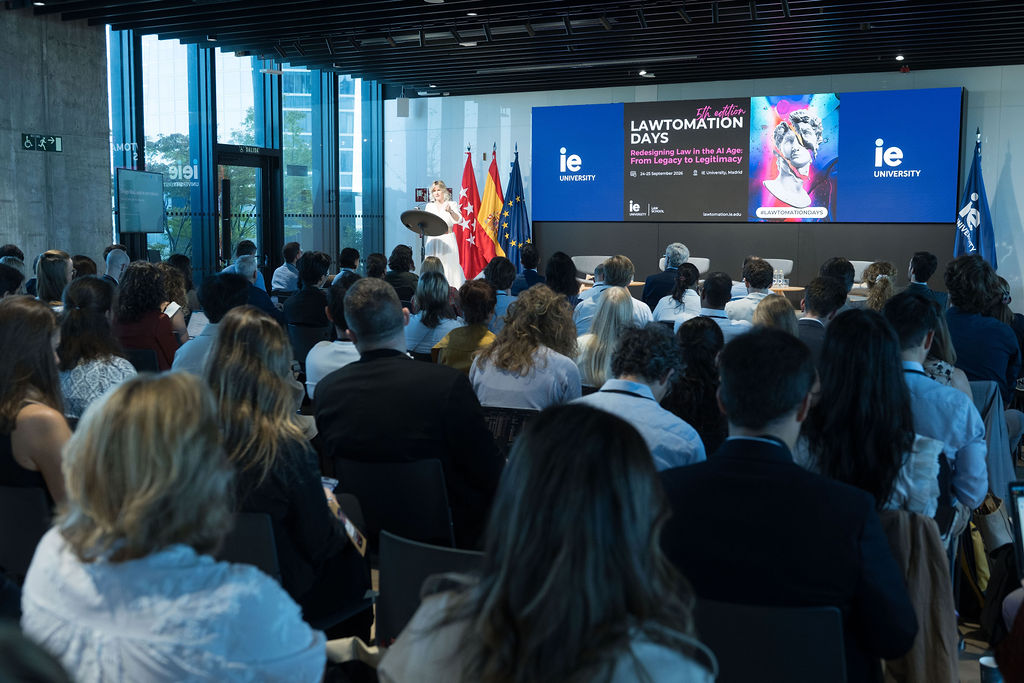
In her welcome address, Soledad Atienza, Dean of IE Law School, reflected on the community the conference has built over five editions. “By now, together with all of you, we have built some legacy”, she said, “and hopefully we are on our way to building our legitimacy”. She also stressed the responsibility law schools share in shaping how the next generation of lawyers is trained. “Universities and law schools in particular have a responsibility to give an answer to society about what we need to teach and how we need to teach”, she said. Lawtomation Days is designed precisely with this spirit in mind.
Opening keynotes: the assumptions built into AI law
Chaired by Francesca Palmiotto, Assistant Professor at IE Law School and co-director of the Lawtomation Centre, the first plenary opened with Eduard Fosch-Villaronga (Leiden University), who examined what happens when robots, standards and laws are built around assumptions that do not fit the people who use them. Drawing on his research into wearable robotics, he showed how safety standards for exoskeletons have not treated sex, gender or body diversity as safety-relevant, leaving devices that fit some users poorly or exclude them altogether. He argued that compliance alone is not enough. “If a standard carries assumptions about the body”, he said, “regulators must also ask whether the standard still makes sense for the person using the technology”.
He then turned to the needs that assistive robotics has largely overlooked. Care technologies have traditionally focused on restoring functions such as eating, dressing and moving, while intimacy and sexuality remain outside the frame. His project, titled “Sex, Care, and Robots”, explores how the sexual rights of persons with disabilities can be meaningfully realized through coordinated change in law, policy and technology. The thread running through his talk was visibility: “What we regulate shapes what law can protect, because law first has to recognize what is there.”
Margot Kaminski from the University of Colorado Law School followed with a transatlantic account of what she called the undoing of AI law. After years of convergence in data privacy law, she described a sharp backlash since 2024. Her case study was the Colorado AI Act, a simplified version of the EU AI Act, centered on a duty to avoid algorithmic discrimination. Following intense lobbying, litigation and federal pressure, the law was repealed and replaced with a far narrower framework centered on the right to contest consequential decisions. It was, she said, “a story of deregulation before a regulation ever went into effect.”
Her lessons centered on framing, the importance of first movers and the fact that the Brussels effect is always a dialogue rather than a one-way export. Yet she closed on a hopeful note, pointing to a widespread public appetite in the United States to address concrete AI harms, particularly those affecting children.
Parallel sessions: a wide map of legal questions
Between the plenaries, parallel panels over the next two days covered governance and regulation, democracy and rights, work and algorithmic management, justice and litigation, markets and data, and global challenges. Topics ranged from human oversight of agentic AI and the protection of minors online to generative AI and copyright, the environmental footprint of data centers and the future of legal education.
The quality of the contributions, the authenticity of the exchanges and the cross-generational camaraderie that emerged over the two days confirmed one of the ideas underpinning the event: the unique beauty of IE Lawtomation Days lies in its people. The academic programme was complemented by opportunities to build connections beyond the panel rooms, including a sunset cocktail overlooking Madrid and the traditional Lawtomation morning run, both generously accompanied by the city’s September weather.
Closing keynotes: rethinking the human and the pace of law
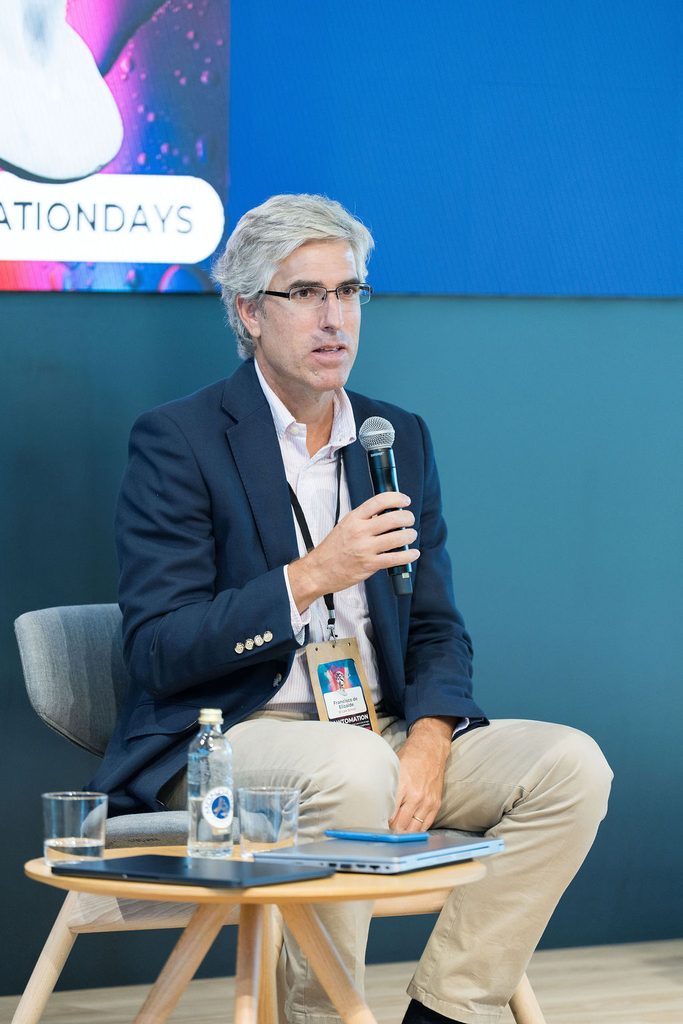
The closing plenary was chaired by Francisco de Elizalde, Jean Monnet Chair in EU Digital Private Law at IE Law School and co-founder of Lawtomation.
Ida Koivisto (University of Helsinki) examined the “new humans” of technology regulation: the people whom laws such as the AI Act, the GDPR and the Digital Services Act require to oversee or review automated decisions. She argued that human-centricity, now a powerful regulatory ideology, places all humans on one side and technology on the other, obscuring the power relations between officials and the citizens they govern. The idea of a pure human free of technology, she argued, is a legal fiction that helps legitimize the deployment of digital technology in public administration.
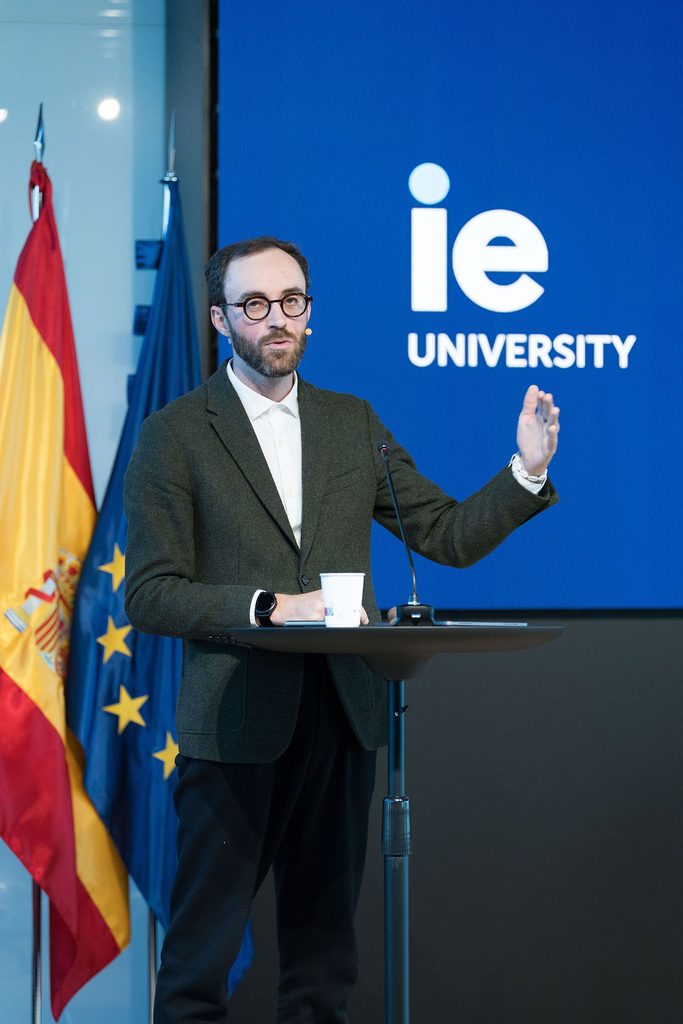
Thibault Schrepel from Vrije Universiteit Amsterdam closed the conference by measuring the weight of EU digital law. After analyzing 34 EU digital regulations, he found more than 1,400 separately defined legal terms, often overlapping or inconsistent, and over 500 rules left to be written later. The rulebook, he argued, grows by addition rather than revision. Drawing on complexity science, he proposed a shift from future-proof regulation to a future-responsive approach, one that can adapt as technology evolves.
“We started by organising a conference. Five editions later, we have found a true community”. With these words, the organisers commented on the success of IE Lawtomation Days 2026.
“This fifth edition confirms our original ambition: to create a space for genuinely cross-disciplinary reflection on AI and the law. We are overwhelmed by the quality of the contributions and, just as importantly, by the kindness and boldness of the exchanges. One defining feature of IE Lawtomation Days is that, at a time when answers often come cheap, we strive to raise the questions that a wider community will then begin to address.” — Antonio Aloisi, Francesca Palmiotto and Francisco de Elizalde
As AI continues to test the foundations of legal systems, this year’s Lawtomation Days offered a clear message: redesigning law requires not only new rules, but better questions about who the law sees, how it adapts and what makes it legitimate.
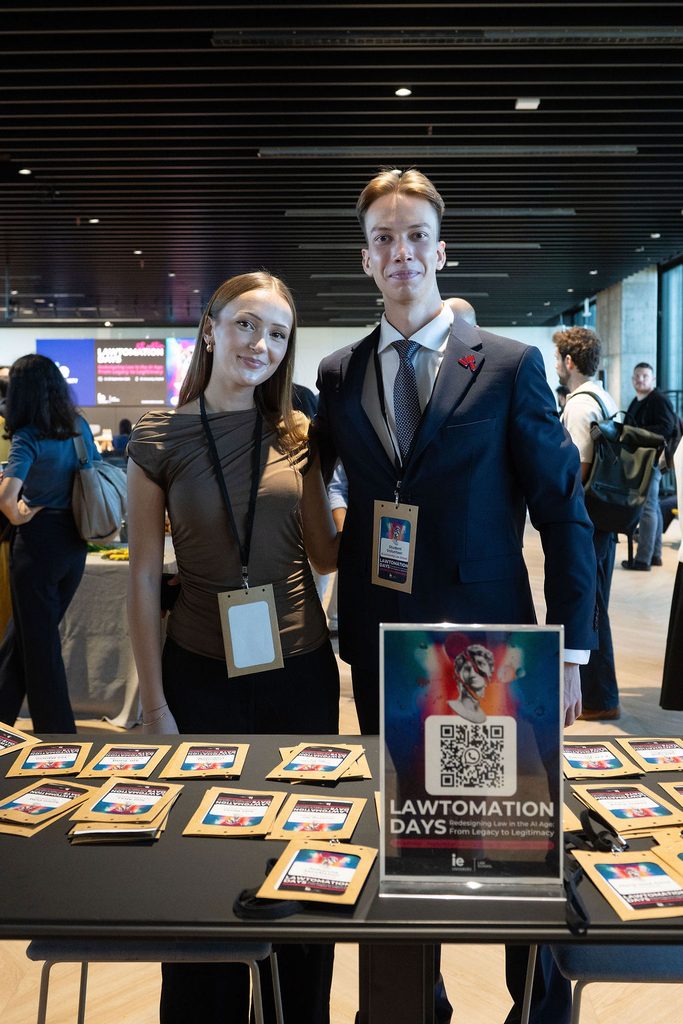
Thank you to all the speakers, chairs, organizers, faculty, staff, the student volunteers and our partners (the International Labour Organization, the European Law Institute and DigiCon) for making this edition possible.