

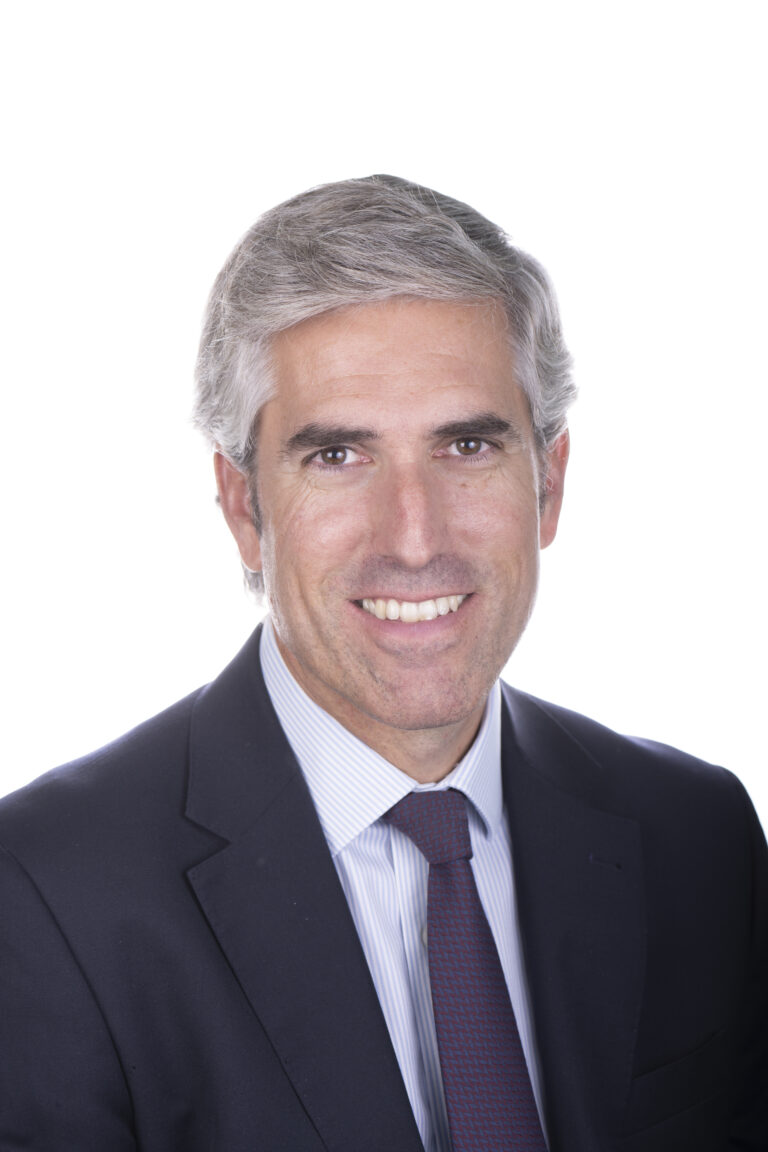
Francisco de Elizalde
Francisco de Elizalde (Ph.D., LLM) is an Associate Professor of Private Law at IE Law School, IE University. He was the Chair of Legal Studies (Head of Faculty, 2020-22). Since 2022, Prof. Elizalde has been the Director of the Jean Monnet Centre of Excellence for Law & Automation, co-financed by the European Commission. He is a permanent Visiting Professor at Koç University (Turkey) and has held Visiting Professorship positions at City University of Hong Kong, University of Bologna and FGV Sao Paulo (Brazil). Prof. Elizalde was a Visiting Scholar at the University of Oxford and the University of Cambridge. He conducted research at Harvard Law School and the Max Planck Institute for Comparative and International Private Law (Germany). Prof. Elizalde practiced law at Garrigues Litigation and Arbitration Department for several years. He is a member of the Madrid Bar Association, the American Society of Comparative Law, and the European Law Institute. Prof. Elizalde has consulted for the European Parliament and the European Commission. Several Advocate Generals of the Court of Justice of the European Union have cited his work.

Antonella Zarra
Antonella Zarra is a researcher and professional with 10 years of experience in AI policy and platforms regulation specialized in the law and economics of emerging technologies. She is currently serving as a Case Handler Officer at the European Commission in Brussels. Within the Digital Services Act Enforcement team, she focuses on content moderation, transparency and the risks posed by online platforms’ algorithms (including generative AI and recommender systems). In addition to her professional role, she is pursuing a PhD in Law and Economics at the University of Hamburg, exploring the role of experimental governance in the regulation of AI and other emerging technologies. Her research extends to the impact of technologies on vulnerable groups, with a particular emphasis on gender equality and disability rights. She is a lecturer in digital platform regulation at IE University in Madrid. Previously, she worked as a part of Meta’s AI team in Madrid, where she coordinated the policy prototyping program Open Loop, focusing on the AI Act. She conducted studies and policy evaluations for international institutions at the Brussels-based think tank CEPS. She holds a Master’s Degree (Magna Cum Laude) in Economics of International Institutions and a Bachelor’s Degree in Economics and Management from Bocconi University, Italy. She was a visiting student at the Chengchi University of Taipei, Taiwan.

Guillermo Toral
Guillermo Toral is an Assistant Professor of Political Science and Ramón y Cajal fellow at IE University (School of Politics, Economics and Global Affairs), and Faculty Affiliate at MIT GOV/LAB. He works in the fields of comparative politics and political economy, with a regional focus on Latin America and Southern Europe, and a substantive focus on issues of development, governance, and corruption. His research agenda centres on relationships among state actors (politicians, bureaucrats, and anti-corruption agents), anti-corruption policies, and their impacts on public service delivery, human development, and democracy. In his work, he uses big administrative datasets, surveys, experimental and quasi-experimental designs, and extensive qualitative fieldwork. Some of Guillermo’s work has been published in the American Journal of Political Science, the Journal of Politics, and the Annual Review of Political Science. Through this work, Guillermo’s current research agenda seeks to understand how the accountability pressures of government actors can enhance and hinder governance, service delivery, and democracy.
The Chair conducts research on EU digital private law, starting from the hypothesis that private law stands out in the digital regulations, yet with societal aims.
The EU Digital Private Law Series gathers experts to discuss different topics encompassed under the Chair from different angles and points of view. They engage in a dialogue with policy makers, civil servants and society at large. The events can be followed online.
Launch event: The Jean Monnet Chair in EU Digital Private Law examines the challenges of the right to honour on digital platforms
Agenda: Jornada sobre el derecho al honor en plataformas digitales (Madrid, 12 de junio de 2026)
Leading experts gathered at IE Law School to discuss freedom of expression, digital regulation, and the protection of fundamental rights.

The Chair brought together leading experts from academia, the judiciary, regulatory bodies, and legal practice to examine the challenges involved in protecting the right to honour in an environment shaped by digital platforms, artificial intelligence, and increasing regulatory complexity.
The event was opened by Soledad Atienza, Dean of IE Law School, and Professor Francisco de Elizalde, who holds the Jean Monnet Chair in EU Digital Private Law. Both highlighted the importance of fostering spaces for reflection on the legal challenges arising from digital transformation and the impact of new technologies on fundamental rights.
HONOUR IN CONFLICT WITH OTHER FUNDAMENTAL RIGHTS
 Moderated by Sara Sánchez, Professor at IE Law School, the first panel brought together Mateja Durovic, Judge at the European Court of Human Rights; Enrique Arnaldo, Justice of the Spanish Constitutional Court; Vera Sopeña, Head of the DSA Unit at Spain’s National Commission on Markets and Competition (CNMC); and Javier Moreno, former Editor-in-Chief of El País, to discuss how digital transformation is reshaping the balance between the right to honour, freedom of expression, and the right to information.
Mateja Durovic noted that the main challenge today lies in identifying reliable and relevant information in an environment where any content can be commented on and amplified by millions of people. He also highlighted the new risks associated with the public presence of judges and other institutional actors in digital spaces.
For his part, Enrique Arnaldo reflected on the evolution of the concept of honour, which is closely linked to human dignity and shaped by the cultural changes of each era. He recalled that politicians must tolerate a higher degree of criticism due to their public exposure, while stressing that there is no right to insult and that freedom of expression cannot justify offensive or unnecessarily harmful statements.
From a regulatory perspective, Vera Sopeña analysed the impact of the Digital Services Act (DSA) and explained how European legislation seeks to ensure that what is illegal offline can also be effectively addressed in the digital sphere.
From a journalistic perspective, Javier Moreno warned against placing excessive trust in regulation. Drawing on professional experiences related to major public-interest investigations, he highlighted the unintended consequences that certain restrictions may have on journalistic work.
PROTECTING HONOUR IN THE DIGITAL ENVIRONMENT
Moderated by Javier Muñoz, International Director at Ontier and Professor at IE Law School, the second panel featured Raúl Rubio, Partner at Pérez-Llorca; Cristina Mesa, Partner at Garrigues; and Luis Ruiz-Rivas, Partner at Dikei. Together, they examined the main challenges involved in protecting fundamental rights within the digital ecosystem.
Javier Muñoz opened the discussion by asking whether freedom of expression is genuinely under threat and warned about the risks posed by what he described as “algorithmic censorship,” which he characterised as a significant threat to liberal democracies.
Cristina Mesa focused on another form of censorship: social censorship. In her view, it can be more severe than judicial censorship due to the speed and reach of public condemnation in the digital environment. She also argued for greater precision in the definition of sensitive legal concepts such as hate crimes.
Raúl Rubio warned about the privatisation of the protection of fundamental rights and pointed out that, in contrast to the growing influence of organisations and interest groups in shaping the digital ecosystem, individual users lack an equivalent capacity to defend their rights and interests.
Luis Ruiz-Rivas addressed the procedural challenges faced by individuals seeking to protect their online reputation, ranging from the slow pace of judicial proceedings to issues related to anonymity, the international nature of digital platforms, and the identification of the entity responsible for the service.
The panellists also discussed with the audience the role of digital platforms in the dissemination of content and the need to find mechanisms that effectively protect individual rights without transferring to platforms responsibilities that belong to public authorities.